

.png)
How to Clean Artificial Grass and Keep It Fresh
Artificial grass is designed to give your garden a smart, usable finish without the weekly mowing, muddy patches or bare areas that come with natural turf. However, it is not completely maintenance-free. Knowing how to clean artificial grass properly will help it stay fresh, upright and welcoming - whether it is beneath a family seating area, around a patio, or a favourite play space for children and pets.
The good news is that regular care is straightforward. A light clean, little and often, is far easier than tackling months of leaves, spills and compacted debris in one go. With the right tools and a sensible routine, your artificial lawn can continue to look well cared for throughout the year.
How to Clean Artificial Grass as Part of Your Routine
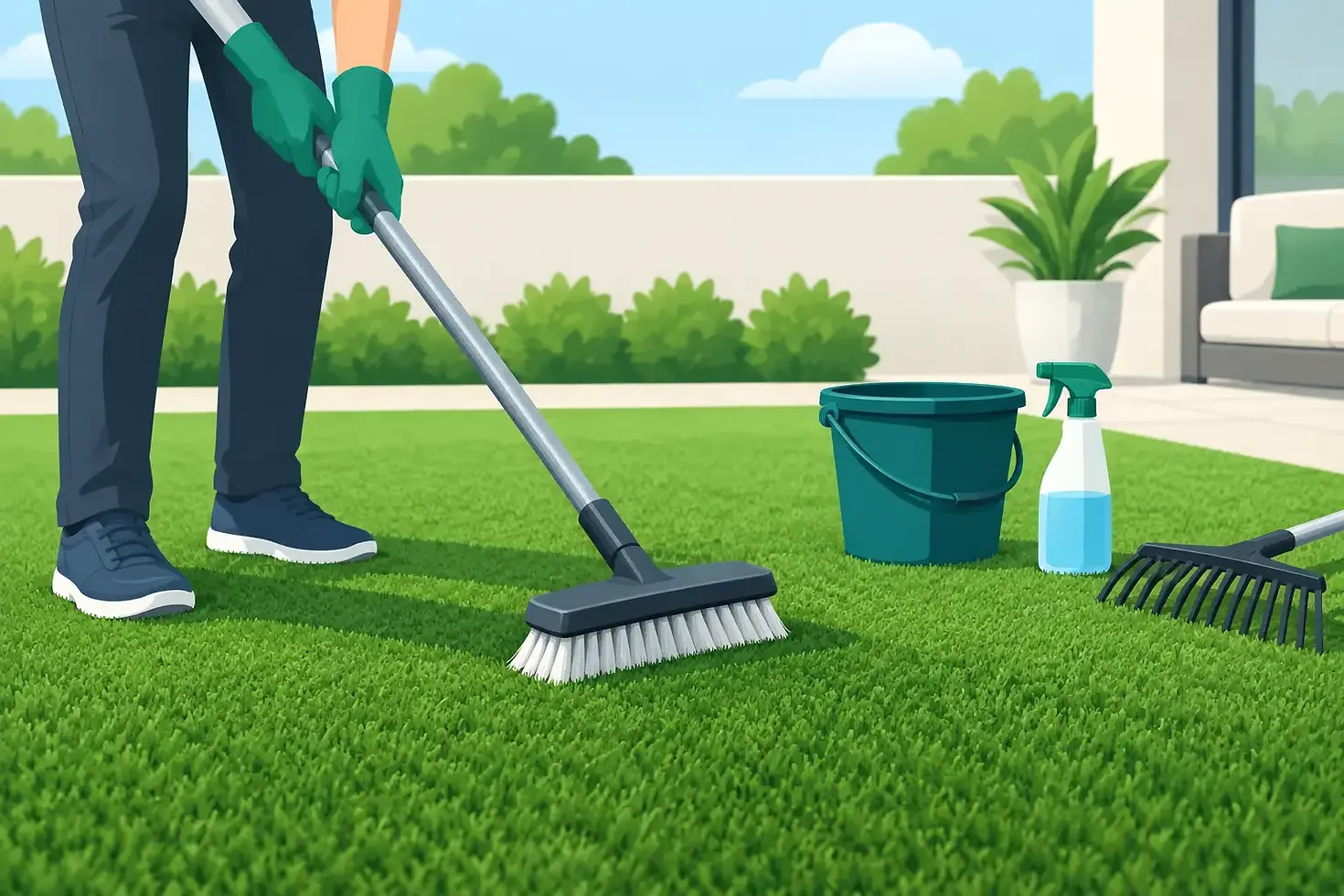
For most homes in Berkshire and Surrey, a simple weekly or fortnightly tidy is enough to keep artificial grass looking its best. Start by removing leaves, twigs, petals and other loose debris. A leaf blower is quick and effective for dry debris, while a plastic rake or stiff brush also works well.
Avoid metal garden rakes, as their sharp tines can catch or damage the fibres. A plastic leaf rake, a broom with firm synthetic bristles, or a purpose-made artificial grass brush is the safer choice.
Once loose debris has been cleared, brush the grass fibres against the direction they naturally lie. This lifts flattened blades and helps restore the fuller, freshly fitted appearance people want from an artificial lawn. Areas in front of doors, beneath garden furniture and along popular walking routes usually need the most attention.
On dry days, a quick rinse with a garden hose will wash away dust, pollen and light surface dirt. There is no need for high pressure. In fact, a pressure washer can disturb the infill, loosen joins or damage the backing if used incorrectly. A gentle spray is normally all that is required.
The basic tools worth keeping handy
You do not need a shed full of specialist equipment. For reliable day-to-day maintenance, keep a plastic rake or leaf blower, a stiff synthetic brush, a garden hose and a clean cloth or sponge nearby. If you have pets, a mild artificial grass cleaner or an enzyme-based pet odour treatment can also be useful.
Choose cleaning products carefully. Harsh bleach, strong solvents and oil-based chemicals can affect the colour or condition of the grass, particularly when repeatedly used in one area. Always check that a cleaner is suitable for artificial turf and test it discreetly first.
Removing Spills and Everyday Marks
Acting quickly is the simplest way to prevent a minor spill becoming a stubborn mark. Mop up liquids with kitchen roll, an old towel or a clean cloth rather than rubbing them deeper into the fibres.
For drinks, food, mud and most everyday messes, rinse the area with clean water and use a small amount of mild washing-up liquid mixed with warm water. Gently dab the affected area with a sponge, then rinse again thoroughly. The aim is to lift the spill away without leaving a soapy residue that could attract more dirt.
Chewing gum, wax or sticky sweets need a different approach. Let the substance harden first by placing ice in a bag over the affected spot. Once it is firm, carefully lift it away with a blunt plastic scraper. Do not use a sharp knife, as it can cut the grass fibres or backing.
Paint, grease and other difficult substances can be more complicated. It depends on what has been spilled and how long it has been left. Start with warm water and a mild detergent, using as little product as possible. If the mark will not shift, seek advice before trying aggressive cleaners. Replacing a small section of damaged grass is far more frustrating and costly than taking a careful approach from the start.
Keeping Artificial Grass Fresh With Pets
Artificial grass is a practical option for pet-owning households because it does not turn muddy after rain. Even so, urine and solid waste need regular attention to prevent odours, especially in warm weather.
Remove solid waste promptly, then rinse the area with a hose. For urine, regular watering helps dilute residue before smells develop. If your dog repeatedly uses the same part of the lawn, give that area an extra rinse every few days.
Where an odour persists, use an enzyme-based cleaner made for artificial grass and follow the instructions on the label. These products are designed to break down the source of the smell rather than simply cover it up. Household disinfectants may seem like a quick fix, but they can be too harsh and are not always suitable for pets, children or artificial turf.
Good drainage also makes a difference. A properly installed artificial lawn should allow water to pass through the surface and base. If water is pooling, smells keep returning or the ground feels unusually soft, it may point to an installation or drainage issue rather than a cleaning problem.
Managing Weeds, Moss and Algae
Weeds can occasionally appear around the edges of artificial grass or grow through gaps where seeds have settled. Remove small weeds by hand when you spot them. If necessary, use a water-based weed killer that is suitable for use around artificial grass, taking care not to overspray nearby planting areas.
Moss and algae are more likely in shaded, damp sections of the garden, especially after a wet winter. Regular brushing and clearing fallen leaves will help air and water move across the surface. A suitable moss and algae treatment can be used where needed, but avoid products that contain harsh chemicals or leave a slippery film.
Keeping borders, trees and overhanging plants trimmed back can reduce the amount of organic debris landing on the lawn. It also lets more daylight reach the surface, which is useful in gardens that are naturally shaded.
Seasonal Care for a Tidy Garden
Autumn is often the busiest time for artificial grass maintenance. Leaves may look harmless, but if they are left to break down they can create a damp layer that encourages moss and makes the lawn look dull. Clear them regularly rather than waiting for every tree in the area to finish shedding.
During winter, avoid leaving heavy items on frozen grass for long periods. Most quality artificial grass can handle frost, but the fibres may be more brittle when frozen. Let snow and ice melt naturally where possible, and do not chip at it with metal tools.
In spring, give the whole lawn a more thorough brush and rinse. This is a good time to move garden furniture, clean underneath it and check the edges for lifting or separation. Summer usually calls for more frequent rinsing, particularly where children, pets and outdoor dining are part of daily garden life.
Common Mistakes to Avoid When Cleaning Artificial Grass
Artificial grass is durable, but a few common habits can shorten its life or spoil its finish. Do not place hot barbecues, fire pits or disposable barbecues directly on the lawn. Heat can melt synthetic fibres very quickly. Take care with cigarettes, too.
Avoid parking vehicles, dragging heavy furniture across the surface or using sharp-edged tools. If garden furniture has been left in place for some time, lift it rather than pulling it, then brush the fibres back up once it has been moved.
Be cautious with sun cream, cooking oils and coloured drinks during summer gatherings. These are easier to deal with straight away than after they have dried in. A small basket with a cloth, mild cleaner and hose attachment can make garden clean-ups much less of a chore.
When It Is Worth Calling a Professional
A routine clean can be handled at home, but some problems need a closer look. Persistent smells, standing water, loose edges, visible joins, flattened areas that will not recover and damaged sections may need professional attention.
At Lay Away UK, we know that a well-finished garden should remain easy to enjoy, not become another demanding job on the weekend list. If your artificial grass needs repair, a deep refresh or advice on improving drainage around your garden, an experienced landscaper can assess the surface and recommend a practical solution.
A clean, brushed artificial lawn makes the whole garden feel more cared for. Give it a few minutes of attention regularly, deal with spills before they settle, and you will keep a neat outdoor space ready for family time, visitors and everyday use.


Comments