

.png)

Front Garden Parking Solutions That Last
- Jack Kendall
- Jul 14
- 6 min read
A second car, regular visitors or a road where parking is always tight can turn an attractive front garden into wasted space. The right front garden parking solutions give you somewhere dependable to park while keeping the property neat, practical and welcoming from the street. For homeowners across Bracknell, Wokingham and the surrounding areas, the best result is rarely just a hard surface laid where the lawn used to be. It is a properly planned driveway that suits the house, handles British weather and makes daily life easier.
Start with access, space and permissions
Before choosing block paving, resin or gravel, look at how a vehicle will enter and leave the property. A parking area is only useful if it can be accessed safely and comfortably. Consider the width of the frontage, the position of trees, walls and utility covers, and whether there is room to open car doors without stepping straight into a flowerbed or onto the road.
If your plans involve creating or altering access across the pavement, a dropped kerb may be required. This is usually dealt with through the local highway authority, and permission should be in place before work begins. It is also worth checking whether your property is in a conservation area or has any restrictions that affect walls, gates or surfacing. A reputable driveway contractor can help you understand the practical requirements, but approval remains an important part of the homeowner's preparation.
Think ahead, too. A space that just fits one small car may feel limiting if your household changes vehicles, a teenager starts driving or visitors regularly need somewhere to stop. Where the frontage allows, a slightly wider layout, a turning area or a clear pedestrian route can add real long-term value.
Choose a surface that suits your home
There is no single best material for every front garden parking project. The right choice depends on the appearance you want, your budget, drainage needs and how much maintenance you are happy to do.
Resin bound driveways
Resin bound surfacing creates a smooth, modern finish using natural aggregate held in a clear resin. It is popular with homeowners who want a clean appearance without the loose stones associated with gravel. When laid correctly on a suitable base, it provides a hard-wearing surface that complements both traditional and contemporary properties.
Resin bound driveways are available in a range of aggregate colours, making it easier to match brickwork, render or existing garden features. Many permeable resin systems can also help manage surface water, although the full construction and ground conditions must be assessed before assuming a driveway will meet drainage requirements.
Block paving
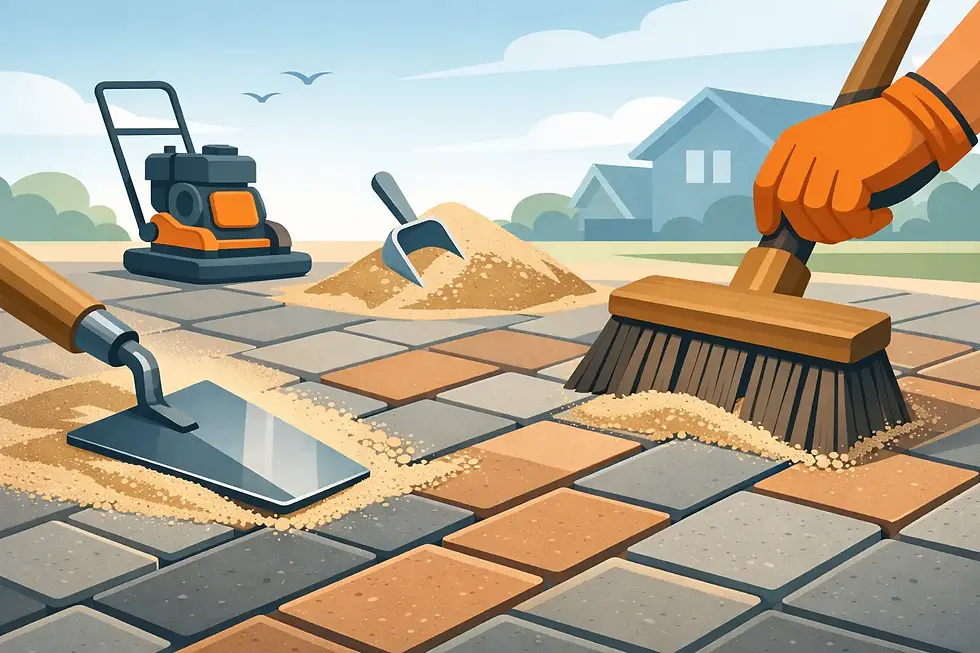
Block paving remains one of the most flexible front garden parking solutions. It works especially well where homeowners want defined edges, contrasting borders or patterns that give the entrance more character. Individual blocks can be replaced if a small section is damaged or stained, which is a practical advantage over some continuous surfaces.
The finish depends greatly on the preparation underneath. A well-built sub-base, sound edging and correct levels are what stop paving from moving, dipping or collecting water. Cheaper installations can look good on day one but reveal their weaknesses after a winter of rain, frost and vehicle use.
Tarmacadam
Tarmacadam is a sensible choice for larger driveways and homes where parking is the main priority. It gives a tidy, durable surface with a straightforward appearance and is well suited to regular vehicle use. With block edging or a feature border, it can look far more refined than many people expect.
It may not offer the same design detail as block paving or resin, but it is often a strong value option where function, clean lines and reliable performance matter most.
Gravel
Gravel can be an attractive, cost-conscious option, particularly for rural-style homes and larger frontages. It provides a traditional finish and can work well with planting, timber gates and brick edging. The trade-off is that loose aggregate needs occasional raking and topping up, and it can migrate onto pavements or into the road if the edging is not properly installed.
For a more stable result, gravel grids can help hold the stones in place while retaining the look people like. This can be particularly useful for parking bays that see frequent use.
Drainage should shape the design
Water has to go somewhere. Replacing soil and lawn with an impermeable surface without considering drainage can create puddles on the drive, water running towards the house or problems at the pavement. It can also lead to avoidable issues with local requirements.
A good driveway design considers falls, drainage channels and whether a permeable surface or suitable soakaway is appropriate for the site. The answer depends on the existing ground, the size of the area and where rainwater can safely drain. It is not simply a case of adding a drain at the end of the job.
This is why site preparation matters as much as the visible finish. Proper excavation, a compacted sub-base and correct levels give the surface strength and help it perform through wet weather. They also reduce the chance of standing water, settlement and cracked edges later on.
Keep some green space where it earns its place
Turning the whole front garden into parking is not always the best use of the space. A narrow planting strip, raised bed or small area of lawn can soften the driveway and improve kerb appeal. It also creates a clearer boundary between the parking area and the home.
Well-chosen planting can be low maintenance. Evergreen shrubs, hardy grasses and compact perennials can give structure without demanding constant attention. If parking space is limited, planting along the boundary or beside the entrance can deliver the same effect without taking away valuable room for vehicles.
A practical layout often includes a clear path to the front door. This matters on rainy school runs, when carrying shopping or when older family members visit. It also prevents people from walking across the driveway or garden border, helping the whole frontage stay smarter for longer.
Details that make parking easier every day
The best front garden parking solutions are designed around ordinary routines, not just the first impression. Consider where bins will be stored, how post and deliveries reach the door, whether there is space for a bike or mobility aid, and how lighting will work after dark.
Low-level lighting can improve safety and make the entrance more inviting, while discreet bollards or a small retaining edge may protect planting and boundaries from accidental wheel damage. Gates can add privacy and security, but they need enough room to open without blocking a car or the pavement. Electric vehicle charging is also worth planning for while groundwork is taking place, even if you are not ready to install a charger immediately.
These details do not need to make the project complicated. They simply need to be agreed before the surface goes down, when changes are far easier and more affordable to make.
Avoid false economies on groundwork
It is tempting to compare driveway quotes by the surface alone, especially when budgets are tight. However, a low price can leave out essential work such as excavation, disposal of spoil, edging, drainage or a suitable sub-base. Those are the parts that protect the investment once the driveway is in use.
Ask for a clear written scope that explains what will be removed, how the base will be built, what materials are included and how the finished levels will be managed. You should also know who will be carrying out the work and what the site will look like at the end of each day. Clear communication is one of the simplest signs of an organised contractor.
As a family-run local business, Lay Away UK focuses on practical advice, quality materials and a finished result that homeowners can rely on. Whether the project is a compact single-car space or a full front garden redesign, the aim should be the same: a driveway that looks right for the property and works without fuss.
A well-planned parking area should make leaving for work, arriving home and welcoming visitors feel easier, not create a new list of maintenance jobs. Start with the way you live, choose materials that suit the property, and give the groundwork the attention it deserves. That is how a front garden becomes a lasting improvement rather than just somewhere to leave the car.


Comments