

.png)
Driveway Drainage Channel Guide for Homes
A driveway can look smart on the day it is laid, but the first heavy Berkshire downpour soon shows whether the groundwork was done properly. Water running towards a garage, pooling beside the front door or spilling across the pavement is more than an inconvenience. Over time, it can undermine the surface, stain paving and put unnecessary damp pressure on your property.
This driveway drainage channel guide explains how channel drains work, where they should be installed and what to consider before choosing a new driveway. The right drainage plan keeps the surface usable in wet weather while protecting the investment you have made in your home.
What is a driveway drainage channel?
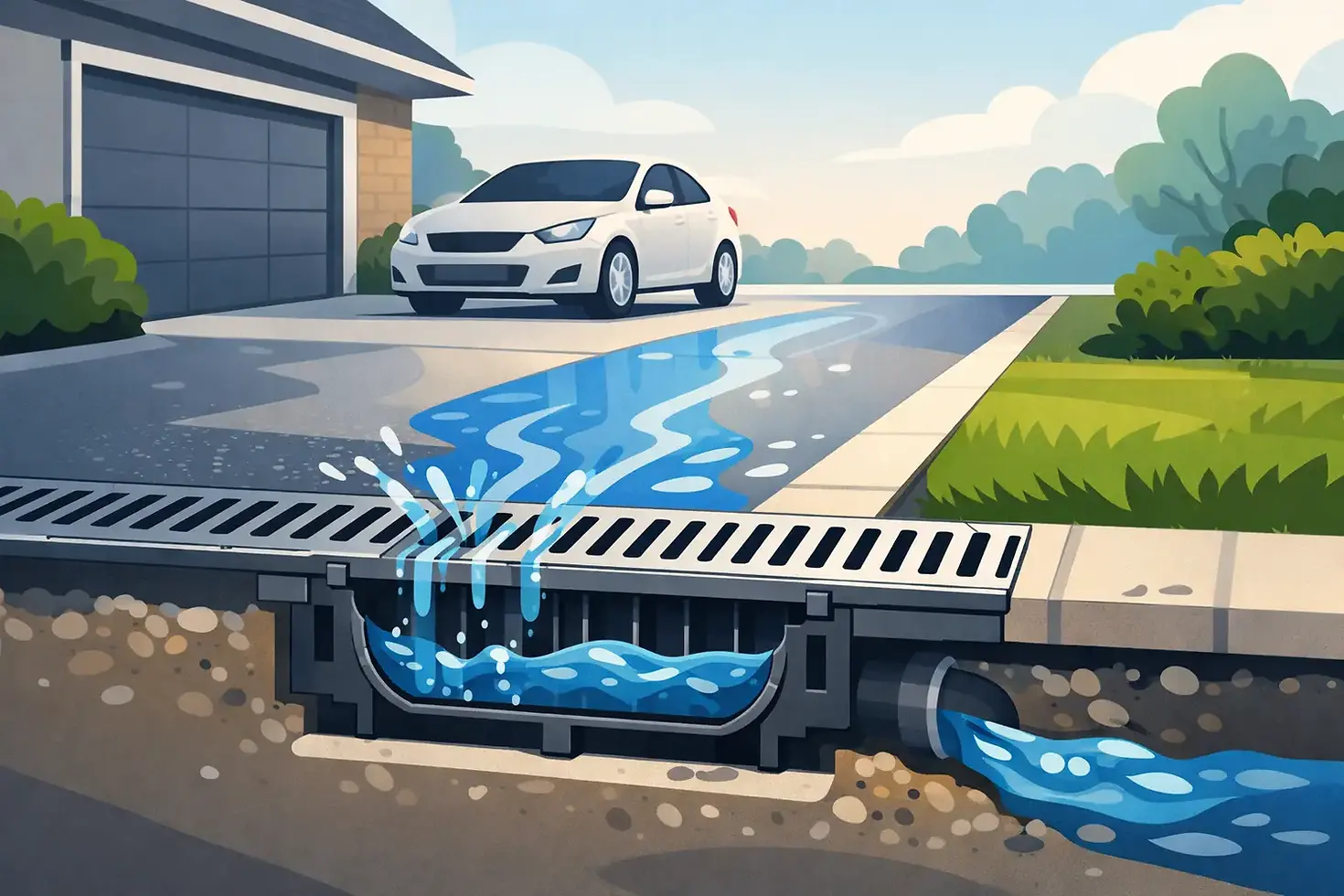
A driveway drainage channel, sometimes called a linear drain or ACO-style drain, is a narrow channel set into the surface of the driveway. It has a grated cover on top and a channel below that collects surface water as it runs downhill. Rather than allowing water to gather at the lowest point, the channel directs it to a suitable drainage destination.
Most homeowners notice channels at the entrance to a garage, across the front of a house or along the lower edge of a sloping driveway. They are particularly useful where the driveway falls towards the property. A neat, correctly positioned channel is discreet, but it does a vital job every time it rains.
The drain itself is only one part of the system. It must be connected to an appropriate outlet, such as a soakaway, a permeable area within your garden or, where suitable and permitted, an existing private surface-water drainage system. Fitting a channel with nowhere sensible for the water to go simply moves the problem further along.
Why drainage matters before the surface goes down
Drainage should be planned before choosing the finish, not added as an afterthought. Whether you prefer resin bound surfacing, block paving, tarmacadam or gravel, the driveway needs the right levels, foundation and route for rainwater.
Standing water can seep into joints and edges, especially during colder months when freeze and thaw cycles can cause movement. On block paving, it may wash out jointing material and encourage weeds. On tarmacadam, repeated water exposure can contribute to cracks and weakening at the edges. Even a resin bound driveway, known for its clean appearance and low-maintenance finish, depends on the correct base and drainage design to perform as it should.
Good drainage also makes day-to-day life easier. You should be able to walk from the car to the house without stepping through a puddle, open the garage without water flowing inside and avoid water tracking dirt across the entrance. These are small details, but they make a finished driveway feel properly considered.
Where should a drainage channel go?
The best location depends on the fall of the driveway and the surrounding ground levels. Water naturally follows the lowest route, so the channel should intercept it before it reaches a vulnerable area.
A channel is often installed immediately in front of a garage door, across the base of a driveway that slopes towards the house, or at the point where the driveway meets a patio or entrance path. On some properties, a channel near the boundary can prevent water leaving the driveway and running onto the pavement or road.
It is not always necessary to install a drain across the full width of the driveway. If levels are designed carefully, water may be directed towards a planted border, lawn or permeable section of the garden instead. However, this only works where the ground can safely accept the volume of water and where there is no risk of flooding a neighbouring property.
A site survey is the sensible starting point. An experienced installer will look at the driveway gradient, the property threshold, existing drains, soil conditions and the amount of hardstanding being created. What works well on a level Bracknell driveway may be completely wrong for a steeply sloping property in Wokingham or Surrey.
Driveway drainage channel guide: choosing the right type
The most common choice is a polymer concrete or plastic channel fitted with a metal, galvanised steel or composite grate. The grate needs to be strong enough for the traffic it will carry. A channel across a pedestrian path has different demands from one regularly crossed by cars, vans or heavier vehicles.
Grate style also affects the finished look. Black composite grates can suit tarmacadam and contemporary resin bound driveways, while galvanised steel often works well with block paving. For a more refined finish, discreet slot drains are available, although they may not be the most practical or cost-effective option for every home.
Capacity matters too. A narrow domestic channel is usually suitable for a standard driveway, but a larger collection area, steeper slope or garage forecourt may need a deeper channel with greater flow capacity. Bigger is not automatically better. The important thing is matching the channel and outlet to the amount of water expected.
Permeable driveways and channel drains
Permeable surfaces can reduce the need for visible drainage channels, but they do not remove the need for proper planning. Water-permeable resin bound systems, correctly laid permeable block paving and well-built gravel driveways can allow rainwater to drain through the surface into a suitable sub-base below.
The key words are correctly laid. A permeable finish laid over an impermeable base will not deliver the same benefit. It may still shed water across the surface, leaving you with pooling and runoff problems. Equally, a permeable driveway can need a channel at the garage threshold or beside the house if water from another area runs towards the building.
For new or replacement front driveways over 5 square metres, rainwater generally needs to drain to a permeable area within the property, or planning permission may be required. This is one reason not to copy a neighbour's driveway layout without understanding what sits beneath it. The right solution depends on your property, not just the surface you like the look of.
What a proper installation involves
A dependable driveway drainage installation begins with setting out the finished levels. The driveway should fall gently away from the house wherever possible. Where a channel is needed, it is excavated to the correct depth, bedded securely and aligned so water flows towards the outlet.
The channel must be supported properly, especially where vehicles cross it. Weak bedding or poor edging can lead to movement, cracked surrounding paving and loose grates. The driveway surface is then cut and finished neatly against the channel, without creating lips that trap water or make the drain difficult to clean.
The outlet is just as important as the visible channel. Depending on the site, this may involve a soakaway crate system, a drainage run to a suitable private drain or discharge into an area of permeable ground. Connecting surface water to foul drainage is not the answer, and allowing water to run onto the public highway can create both practical and legal problems.
Ask your installer to explain the proposed water route in plain language before work begins. You should know where the channel will sit, where the water will end up and how the driveway levels will protect your home.
Maintaining your driveway channel drain
Channel drains are low maintenance, not no maintenance. Leaves, mud, gravel and moss can collect in the grate and slow the flow of water. A quick check after autumn leaf fall and before the wettest months can prevent a small blockage becoming a large puddle.
Lift the grate carefully and remove debris from the channel. A hose can help clear fine silt, but avoid forcing material further into the outlet. If water still drains slowly, the downstream pipework or soakaway may need professional attention.
Take extra care with gravel driveways, where loose stones can enter the channel, and with nearby planted beds, where soil and bark can wash onto the surface. Keeping the edges tidy is often enough to keep the drainage working well.
Questions worth asking before you accept a quote
A clear quote should cover more than the visible driveway finish. Ask whether drainage channels are included, how many are needed and where the water will discharge. It is also worth confirming whether the existing levels allow water to fall away from the house, whether the grate is suitable for vehicle use and what preparation is included beneath the channel.
Be cautious of a price that looks attractive because drainage has been left vague. Correct excavation, quality materials and a suitable outlet take time, but they can prevent costly remedial work later. Honest value is not about cutting out the groundwork that protects the finished surface.
At Lay Away UK, we believe a driveway should be built to handle real family life and real British weather, not simply to look good in photographs. If you are considering a new driveway in Berkshire, Surrey or the surrounding areas, a free quote and site assessment can give you clarity before any work starts. A well-planned drainage channel is one of those practical details you may barely notice afterwards, which is exactly how it should be.


Comments