

.png)

Driveway Replacement Guide UK Homeowners Need
- Jack Kendall
- Jun 8
- 6 min read
If your driveway has started to sink, crack, hold water or simply look tired next to the rest of your home, replacing it can make a bigger difference than most people expect. This driveway replacement guide UK homeowners can rely on is here to help you make the right call before you spend money, choose a surface or book a contractor.
A new driveway is not just about appearance. It affects daily use, drainage, parking, maintenance and the first impression your property gives from the street. Done properly, it adds kerb appeal and gives you a surface that works hard for years. Done badly, it can lead to puddling, movement, weed growth and repairs you did not plan for.
When a driveway needs replacing, not repairing
Some driveways can be patched up. Others are past that point. If the surface has isolated damage, such as a few loose blocks or a small cracked section, repair may still be worthwhile. But if the base is failing underneath, surface fixes rarely last.
Common signs that replacement makes more sense include widespread sinking, repeated cracking, poor drainage, edge breakdown and uneven areas that create a trip hazard. If you are constantly paying for small repairs, that money is often better put towards a full replacement with proper groundwork.
This is where experience matters. The visible surface is only part of the job. A driveway is only as good as what sits beneath it, and many problems start with poor excavation, weak sub-base installation or rushed finishing.
Driveway replacement guide UK: choosing the right material
There is no single best driveway surface for every home. The right choice depends on budget, appearance, maintenance expectations and how the driveway will be used.
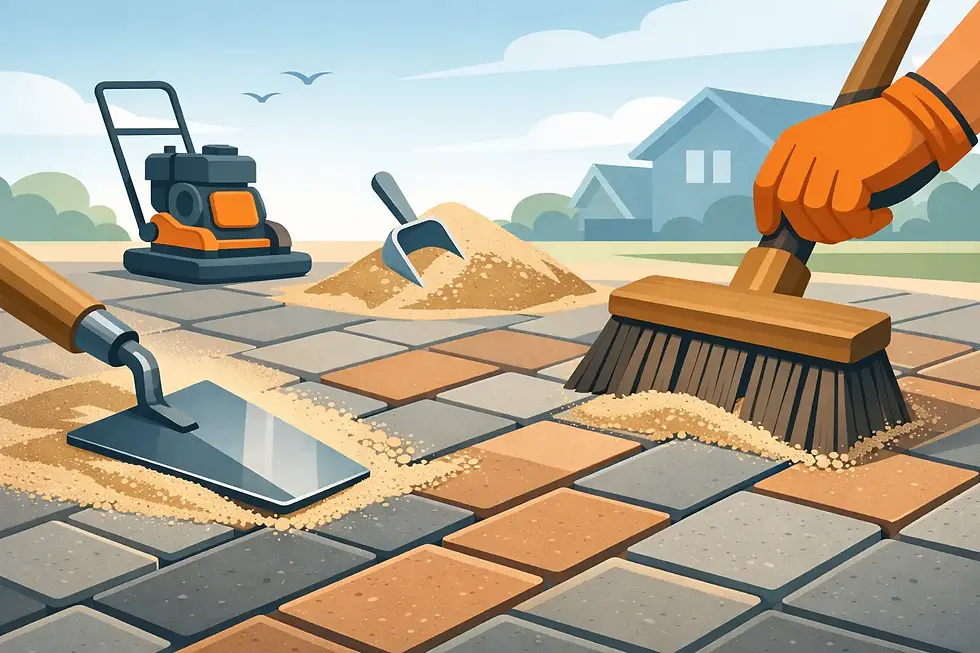
Block paving remains a popular option because it suits both traditional and modern properties. It offers plenty of design flexibility in colour, pattern and edging, and individual blocks can be lifted and replaced if damage occurs later on.
That said, block paving needs proper installation to stay looking smart. If the base is not prepared correctly, you can end up with movement or dips over time. Some homeowners also find that joints need occasional attention to keep weeds and moss under control.
Tarmacadam is a practical, hard-wearing choice that works especially well for larger driveways. It gives a neat, clean finish and is often one of the more cost-effective options when compared with decorative surfaces.
It may not offer the same visual detail as block paving or resin, but it is durable and dependable. For busy family homes where ease of use matters just as much as looks, it is often a sensible option.
Resin bound
Resin bound surfacing has become increasingly popular for homeowners who want a smart, contemporary finish. It is smooth underfoot, available in a wide range of aggregate blends and, when laid correctly, can provide good permeability.
The finish is attractive, but the quality of installation is vital. Resin is not a material where corners should be cut. Base condition, weather during installation and product quality all affect the final result.
Gravel
Gravel can be one of the more affordable ways to replace a driveway and it suits certain property styles very well. It also allows water to drain through naturally.
The trade-off is maintenance. Gravel shifts, spreads and can be less convenient for pushchairs, bikes and wheelie bins. It is not always the best fit for households that want a low-maintenance finish.
Concrete and other options
Concrete can provide a solid, long-lasting surface, although some homeowners prefer the appearance of other materials. Slabbed or decorative finishes can also work, but they need careful planning to avoid future movement or staining.
What affects the cost of a new driveway?
Driveway replacement costs vary because every property is different. Size is an obvious factor, but it is far from the only one. Access to the site, ground conditions, drainage requirements, existing driveway removal and the material you choose all influence the final price.
A straightforward replacement on a level site will usually cost less than a project where old materials need heavy removal, levels need correcting or drainage needs to be redesigned. Edging, steps, walls and decorative features also add to the overall figure.
This is why a proper site visit matters. Honest pricing should reflect the actual job, not a rough guess. A cheaper quote can look appealing at first, but if it skips essential groundwork or drainage work, it often becomes the more expensive option later.
The groundwork is where quality starts
Any proper driveway replacement guide UK readers use should make this point clearly - the finish on top is only half the story. The real strength of a driveway comes from the excavation, sub-base, compaction and levels underneath.
The old surface needs to be removed properly, the ground prepared to the correct depth and the new foundation built to suit the chosen material and expected traffic. Drainage should be considered from the start, not treated as an afterthought.
If water sits on the surface or runs towards the house, that is a sign something has gone wrong in the planning or installation. Good levels help protect both the driveway and the property itself.
Planning, drainage and practical UK rules
Many homeowners are surprised to learn that drainage can affect whether planning permission is needed. In simple terms, if a new driveway allows water to drain naturally or into a suitable permeable area, that can avoid problems. If surface water is directed into the public sewer, that may raise issues.
Rules can vary depending on the property and location, so it is always worth checking what applies before work starts. This is especially relevant for larger front garden conversions or properties with specific local restrictions.
Good contractors will raise this early. It is part of doing the job properly, and it prevents awkward surprises once work is underway.
How to choose the right installer
A new driveway is a significant investment, so choosing the right company matters just as much as choosing the right surface. Homeowners should look for clear communication, proper site assessment, a written quotation and evidence of previous work.
It also helps to work with a team that can advise honestly rather than simply push the most expensive option. Sometimes a homeowner wants the visual finish of resin but the budget fits block paving better. Sometimes tarmacadam is the smarter choice for a long, heavily used driveway. Good advice should reflect how you live, not just what looks good in a brochure.
Local reputation counts as well. A dependable family-run contractor has more to lose by doing a poor job, which is why trust and workmanship go hand in hand. Companies such as Lay Away UK build that trust by combining practical advice, organised installation and a finish that looks right and lasts.
Questions worth asking before work begins
Before agreeing to a driveway replacement, ask what preparation is included, how waste will be removed, what drainage solution is proposed and whether edging or finishing details are part of the quote. You should also ask how long the work is expected to take and what could affect the schedule.
It is sensible to ask about payment structure too. For many households, affordability matters just as much as design. Flexible finance can make a high-quality installation more manageable, especially when a driveway replacement was not planned months in advance.
Balancing looks, budget and long-term value
The best driveway choice is rarely about the lowest upfront cost alone. A surface that costs less on day one may need more maintenance or may not suit the property as well. On the other hand, paying more for a decorative finish only makes sense if it gives you a result you will genuinely value.
Think about how many cars use the driveway, whether children regularly play near it, how much maintenance you want to take on and how important appearance is from the road. A practical family driveway and a statement front entrance can both be the right decision - it depends on the home, the budget and the result you want.
Replacing a driveway should feel like a clear improvement, not a gamble. When the groundwork is right, the drainage is planned properly and the material suits the way you live, the finished result does more than tidy up the front of the house. It gives you a surface you can rely on every day, and that peace of mind is often the part homeowners value most once the job is done.


Comments